Isolated VPNs
FortiGate, Cisco AnyConnect, GlobalProtect, Pulse/Ivanti, OpenVPN and WireGuard, each in its own Docker container. Your routing table and DNS never change.

Team products
QuickSSH
Linux · early accessQuickSSH runs every VPN in its own isolated container. Reach servers, remote desktops, files and databases behind many VPNs at the same time, without touching your machine's network. The server does the work; credentials never leave it.
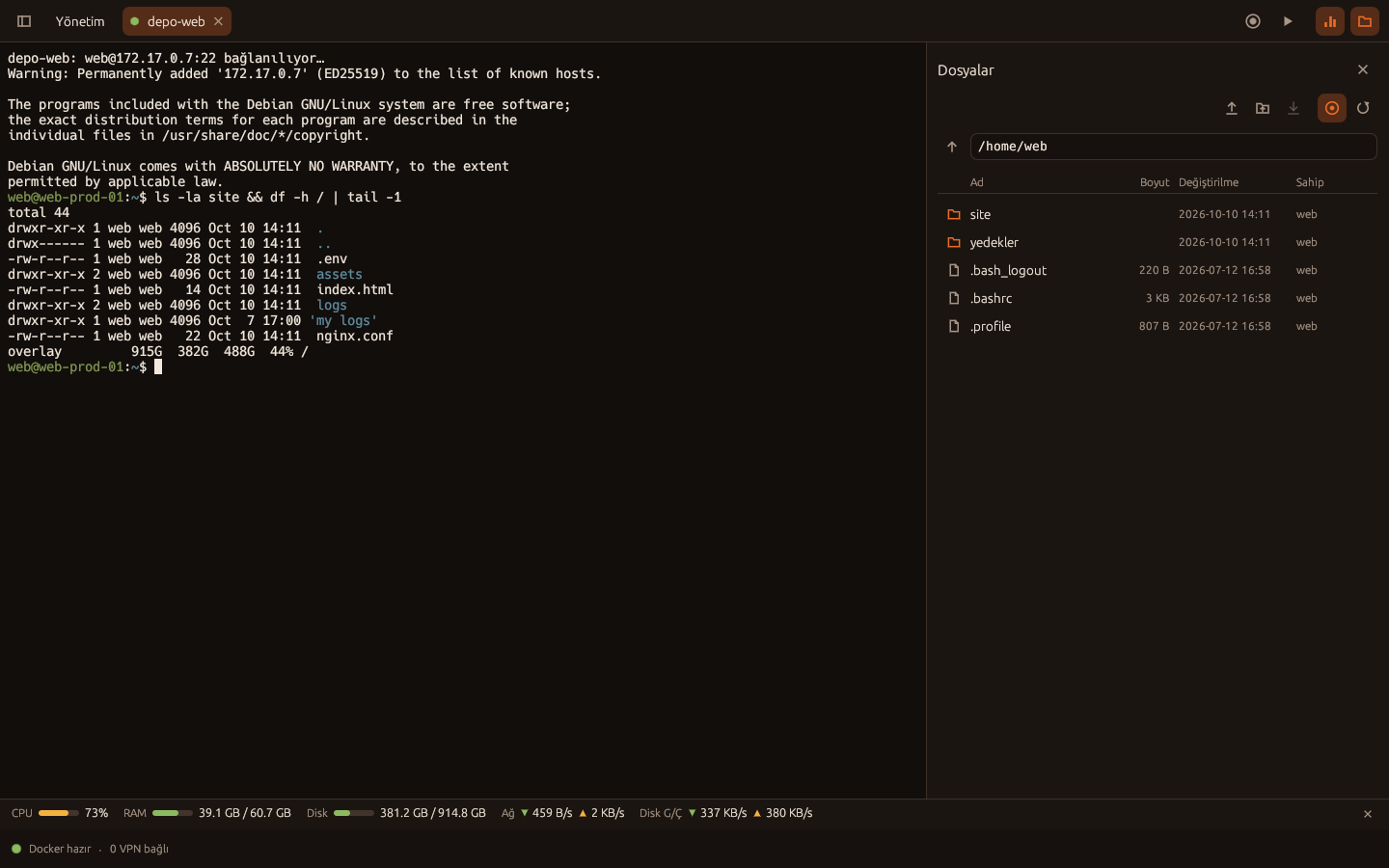
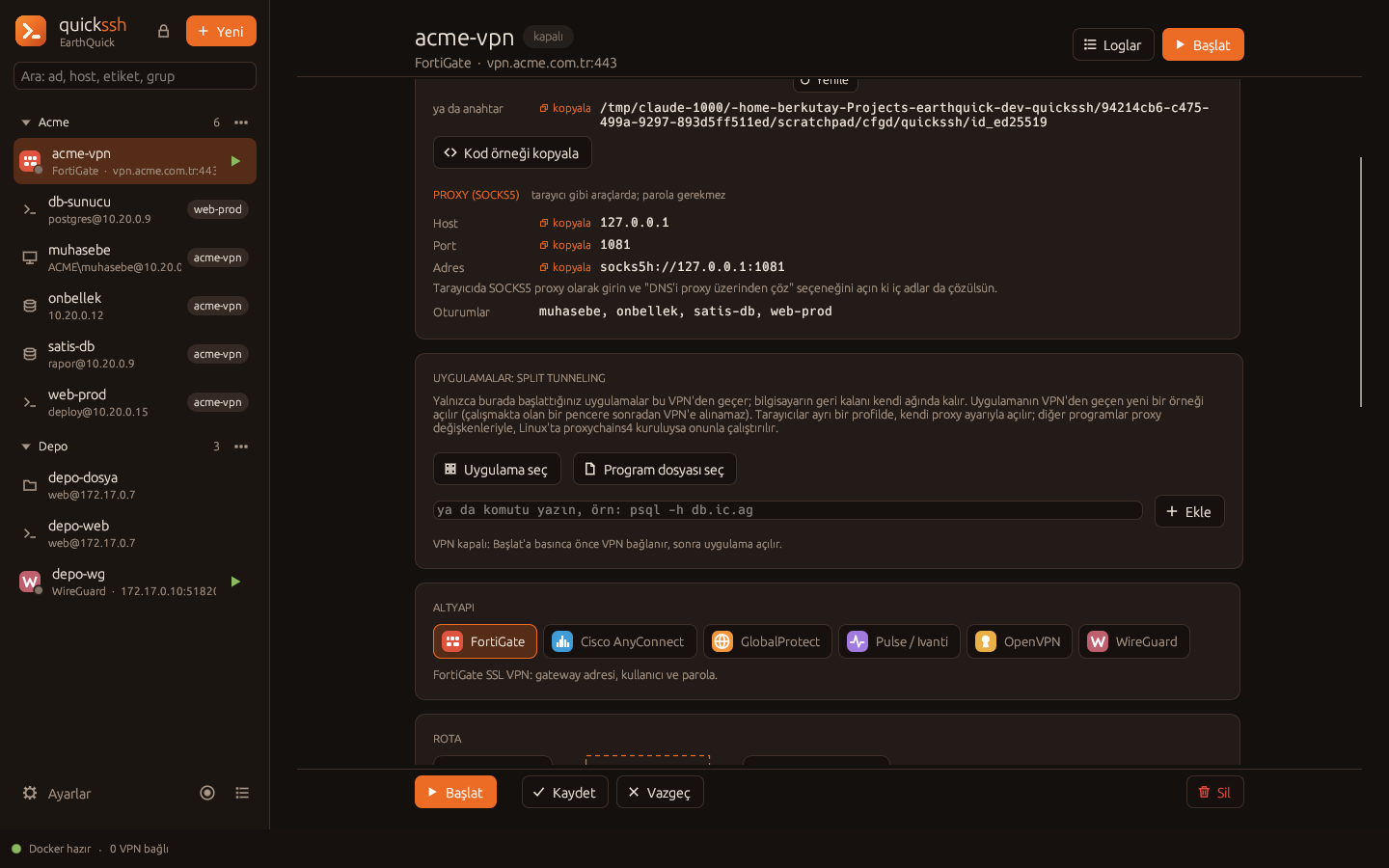
FortiGate, Cisco AnyConnect, GlobalProtect, Pulse/Ivanti, OpenVPN and WireGuard, each in its own Docker container. Your routing table and DNS never change.
SSH sessions open in tabs with server stats, a file panel that follows your directory, macros and VPN → VPN → SSH → SSH chains.
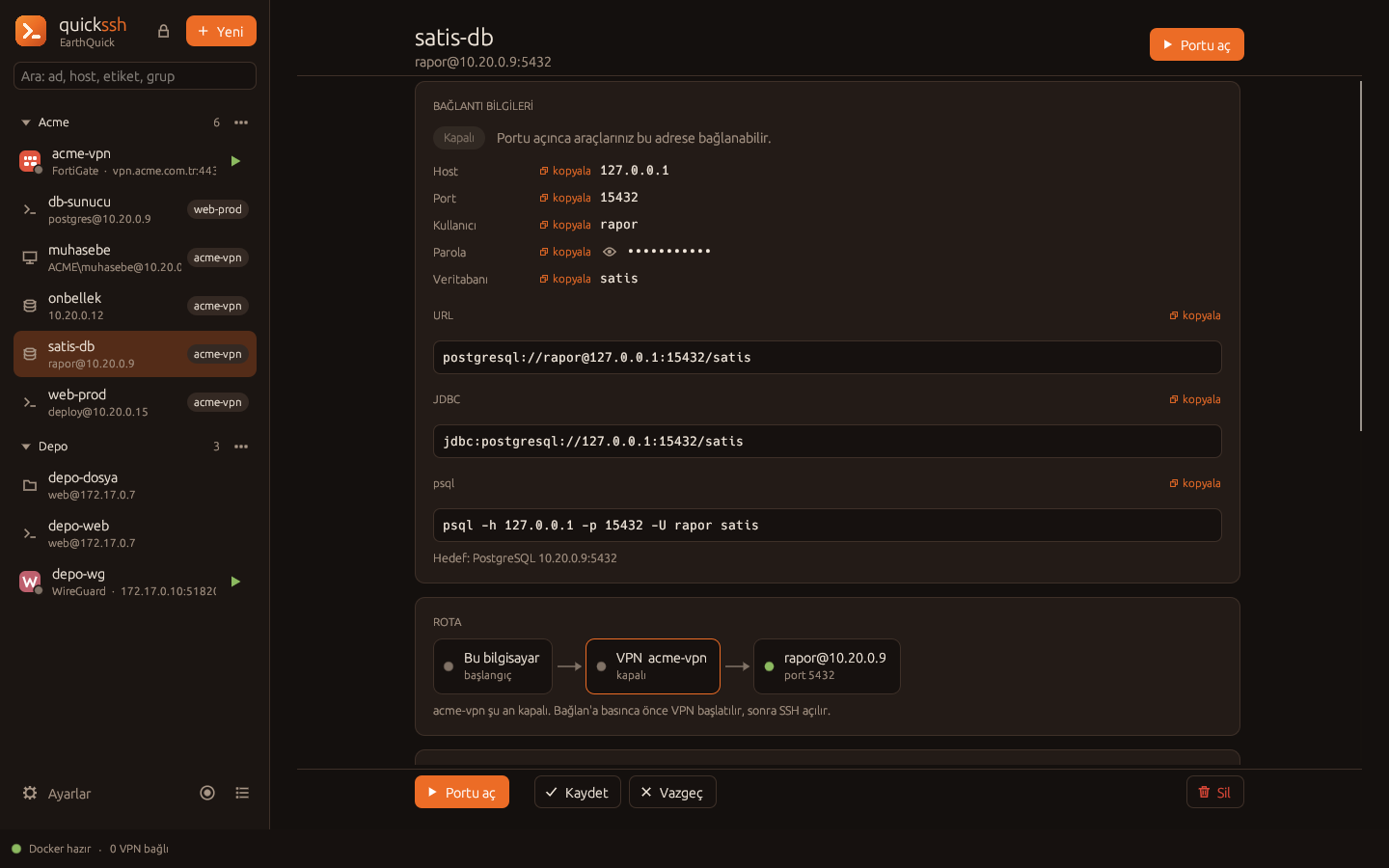
PostgreSQL, MySQL, MSSQL and Redis get a fixed local port. Your IDE connects to 127.0.0.1; the VPN starts on first use.
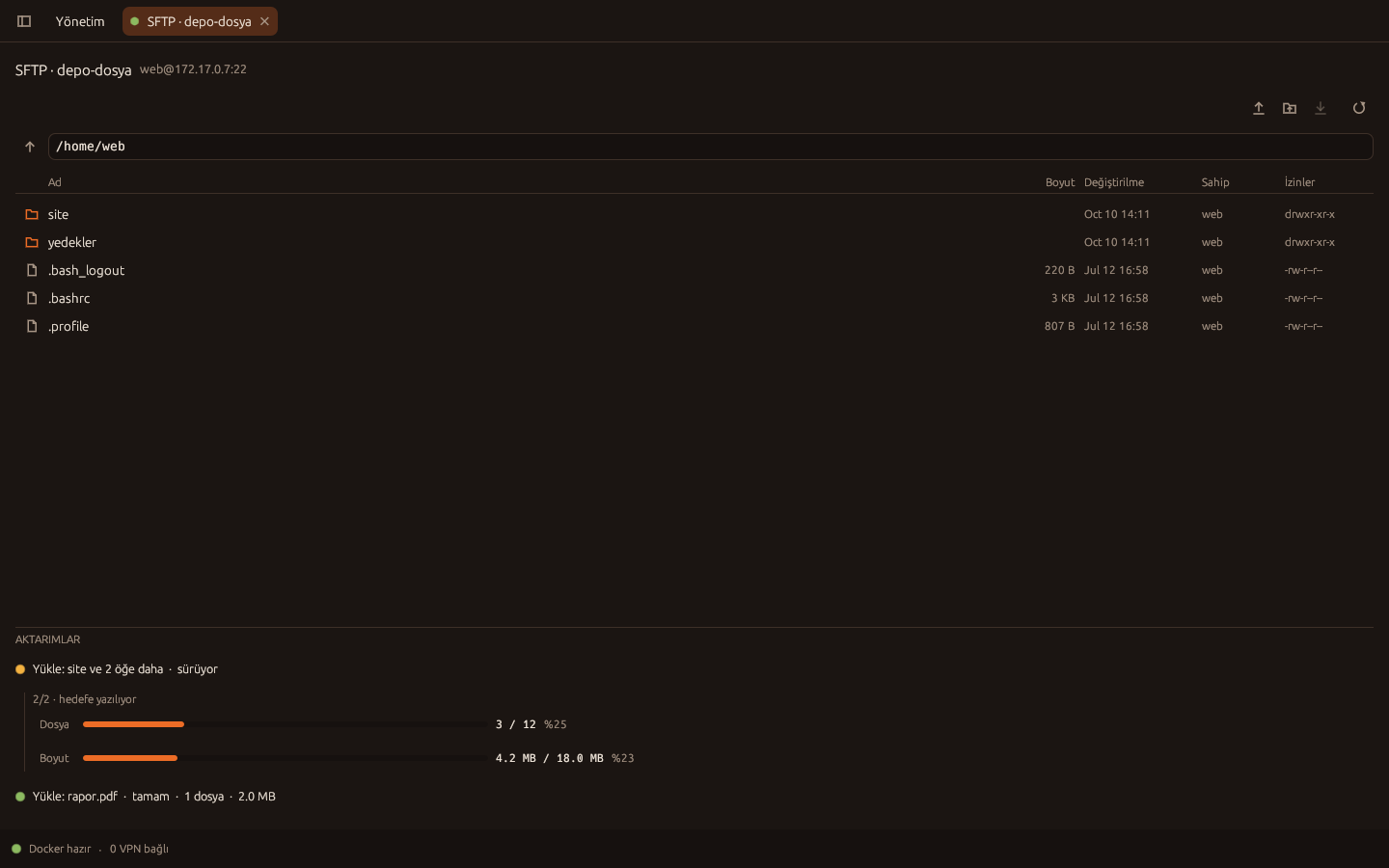
RDP sessions as tabs, and a full SFTP/FTP/FTPS file manager with drag-and-drop and separate progress for file count and size.
Each VPN exposes an SSH tunnel and a SOCKS5 proxy, so a single browser, IDE or command can go through it while the rest of the machine stays local.
A central server holds records; admins decide who reaches what. Local records are encrypted with Argon2id and XChaCha20-Poly1305, and every action is audit-logged.
AI
Built with AI coding agents under a strict architecture brief: "the server does the work, the client only displays". The brief spells out security invariants (secrets never leave the server, records are never stored unencrypted) and UI rules, and every behaviour change ships with tests.